Retrofitting Heritage: Strategic Energy Efficiency for UK Listed Buildings
Retrofitting Heritage: Energy Efficiency for UK Listed Buildings
Energy efficiency in listed buildings represents a critical priority for modern heritage conservation. Owners of Grade I and Grade II properties often face unique thermal challenges. Therefore, practitioners must reduce carbon footprints without harming the historic fabric.
The Importance of Conservation-Led Retrofitting
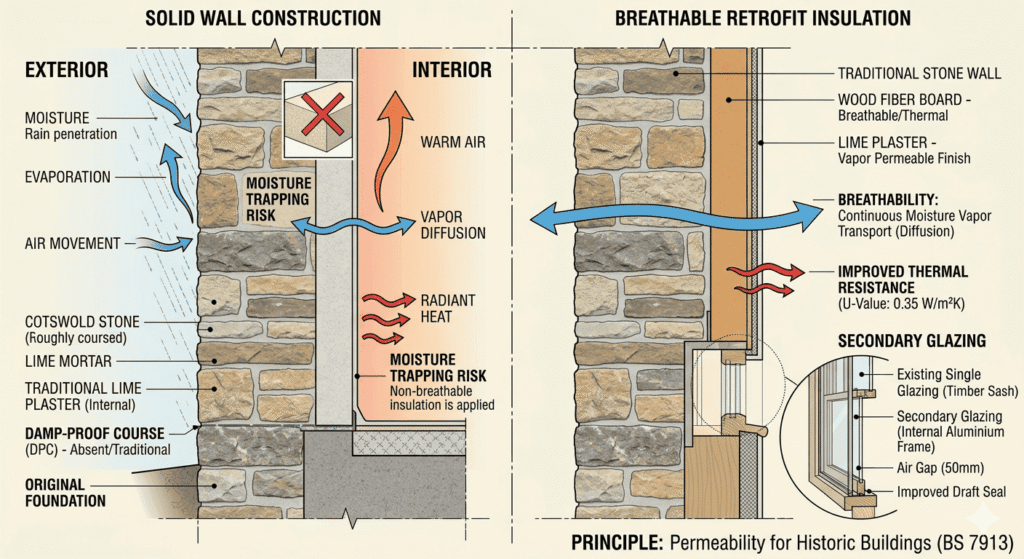
Traditional buildings require a specific understanding of historic materials. Unlike modern properties, these structures manage moisture through natural evaporation. If you apply non-breathable materials, you risk trapping dampness within the walls. Consequently, this leads to structural decay over time. Experts always recommend a sensitive approach to ensure the building remains healthy and efficient for the future.
Implementing the Whole Building Approach for Energy Efficiency
The most vital strategy for these projects involves the “Whole Building Approach”. Indeed, builders originally designed traditional structures to be vapor-permeable. For instance, using modern insulation materials often traps moisture within the walls. This lack of permeability causes significant structural decay over time. Instead, practitioners maintain energy efficiency in listed buildings by selecting natural, breathable materials. Wood fiber and lime-based mortars allow the building to “breathe” effectively.
Strategic Interventions for Energy Efficiency in Listed Buildings
-
Draught-Proofing: Many owners consider this the most cost-effective method for improving energy efficiency in listed buildings. Professionally installed seals on sash windows significantly reduce heat loss.
-
Permissions: Most importantly, these specific minor works usually do not require Listed Building Consent.
-
Secondary Glazing: Conservation officers frequently prohibit double glazing due to its visual impact. Consequently, secondary glazing systems offer a high-performance alternative.
-
Versatility: In addition, these systems remain entirely reversible, leaving the original windows untouched.
-
Insulation: You can achieve thermal gains by placing breathable insulation between floor joists with minimal disruption.
Legal Regulations and Energy Efficiency Exemptions
UK regulations provide EPC exemptions for some historic buildings. Nevertheless, the government does not grant these exemptions automatically to every owner. Specifically, an exemption may apply if the energy efficiency in listed buildings requirements unacceptably alter the property’s appearance. Moreover, the UK’s “Net Zero” targets are currently changing the existing rules. Now, the focus shifts from simple exemptions toward sensitive, long-term adaptation.
Conclusion Retrofitting a listed building remains a marathon rather than a sprint. By focusing on reversible and breathable interventions, owners protect their historic homes for future generations. In conclusion, these methods ensure sustainability while preserving the unique character of the property for centuries.