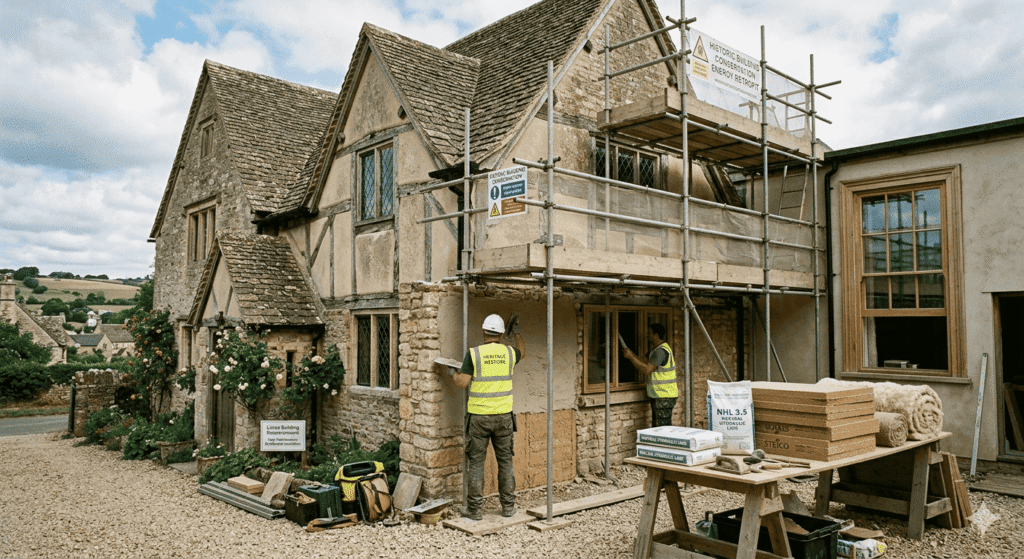
Retrofitting Listed Buildings: Balancing Comfort and Conservation
Retrofitting Listed Buildings: Balancing Comfort and Conservation
Owning a piece of history is a privilege, but it also comes with a unique set of challenges—especially when winter arrives. With rising energy costs and growing environmental concerns, many heritage property owners are asking the same question: How can we modernise our heating and energy efficiency without destroying the historic character of our homes?
The answer lies in retrofitting listed buildings through a philosophy known as “conservation-led adaptation.” Here is how you can improve your property’s thermal performance while fully respecting its past.
Understanding the “Breathability” of Historic Homes
Before introducing any new materials into a Grade I or Grade II listed property, it is vital to understand how these structures work. Unlike modern buildings that rely on barriers to keep moisture out, traditional UK buildings are designed to be vapor-permeable. They absorb moisture and release it naturally through evaporation.
When retrofitting listed buildings, using standard modern insulation (like polyurethane foam or synthetic sealant) can be disastrous. These materials trap moisture within the walls, leading to interstitial condensation, timber rot, and damp issues.
Key Rule: Always prioritize natural, breathable materials such as wood fiber, hemp, and lime-based plasters to keep the fabric of the building healthy.
Low-Impact, High-Return Upgrades
You do not need to strip your house down to the studs to see a massive difference in energy bills. In fact, conservation officers prefer minimal, reversible interventions.
1. Advanced Draught-Proofing
A significant amount of heat escapes traditional homes through gaps in doors and historic sash windows. Professional draught-proofing involves installing hidden timber or brush seals. It is highly cost-effective, invisible, and usually does not require Listed Building Consent (LBC).
2. Secondary Glazing Over Double Glazing
Replacing historic single-glazed glass with modern double glazing is rarely permitted because it alters the profile and reflection of the windows. Secondary glazing is the perfect alternative. By installing a discrete independent glass pane on the interior side, you achieve similar thermal and acoustic benefits while leaving the original window completely untouched.
3. Loft and Floor Insulation
Heat rises, making the roof a prime target for upgrade. Laying breathable insulation, like sheep’s wool or cellulose, between loft joists is an easy win. Similarly, insulating beneath suspended timber ground floors can stop cold drafts coming up from the earth.
+------------------------+------------------------------------------+
| Intervention           | Why It Works for Listed Buildings        |
+------------------------+------------------------------------------+
| Draught-Proofing       | Low cost, invisible, rarely needs LBC    |
| Secondary Glazing      | 100% reversible, protects old glass      |
| Lime Plaster/Mortar    | Maximises breathability, prevents damp  |
+------------------------+------------------------------------------+
Navigating Regulations and Permissions
The UK regulatory landscape is shifting. While some historic properties can claim exemptions from standard Energy Performance Certificate (EPC) requirements, the government’s overarching “Net Zero” targets mean that blanket exemptions are becoming rarer.
The focus has officially shifted from avoiding retrofitting to finding sensitive ways to achieve it. Before embarking on any significant works, it is crucial to consult your local planning authority and refer to official heritage frameworks.
For official, comprehensive guidance on permissions, technical advice, and statutory regulations regarding heritage properties, you can visit the Historic England Advice on Energy Efficiency portal or other post.